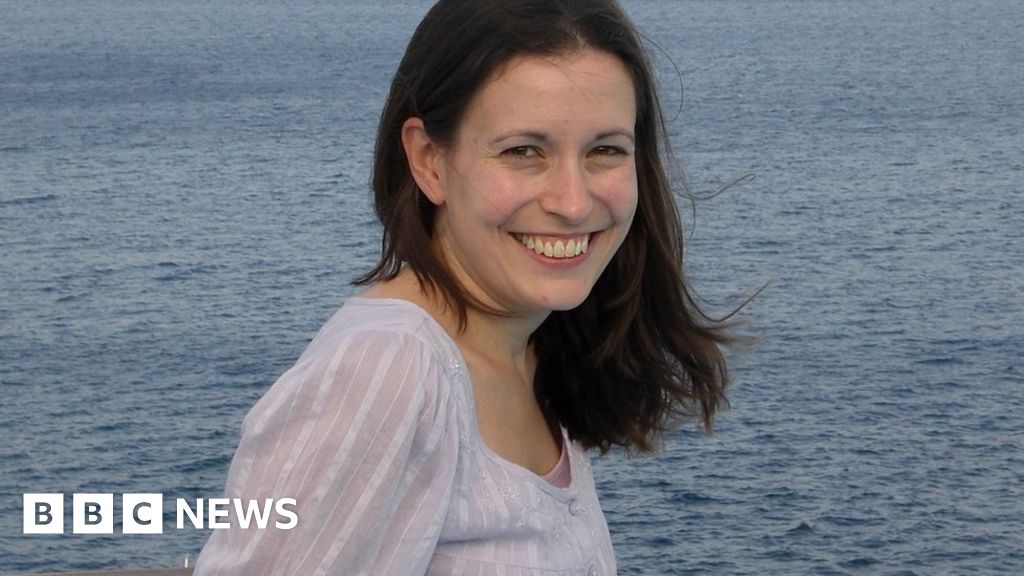
Rosie Longman says she is "bent double" and unable to stand at times because of the pain A woman who had to change careers because of endometriosis has said an improvement in attitude towards women with the condition feels "incredible". Endometriosis affects one in 10 UK women and can cause debilitating pain, very heavy periods and infertility. MPs began an inquiry into the condition after BBC research, and will listen to the experiences of those living with it when hearings get under way later.
Rosie Longman, 40, said: "We're finally being believed and listened to." Ms Longman, from Bishop's Stortford, Hertfordshire, has had four operations since being diagnosed a decade ago and is due to have a hysterectomy. Her career as a practising criminal barrister came to an end when she could no longer spend hours in court.
"The pain is like someone has a grip on your insides, pulling and twisting them and kicking you in the crotch," she said. "You are bent double and can't stand at times." Emma Barnett will tell MPs she was only diagnosed after more than 20 years of painful periods More than 13,500 women took part in BBC research into endometriosis, with half saying they had suicidal thoughts and many telling how they have had to rely on highly addictive painkillers.
Most also said endometriosis had badly affected their education, career and relationships. On average it takes seven and a half years to be diagnosed, there is no cure and treatment has included hormone therapy and surgery. Ms Longman is set to be among those to give evidence to the All Parliamentary Group for Endometriosis.
"For endometriosis to be discussed like this is incredible," she said. "This inquiry is the culmination of years of campaigning and fighting for better care." What is endometriosis? BBC 5 Live presenter Emma Barnett will also give evidence, having suffered from painful periods for more than 20 years before being diagnosed at 31.
She said: "I want to talk about how long it took for me to be diagnosed and how I wasn't believed by doctors and told to take painkillers." The inquiry is due to hear from doctors and look at ways to improve diagnosis and treatment. Emma Cox, from Endometriosis UK, said: "We need to see stark changes to the system.
Society and the NHS must wake-up and understand the devastating impact the condition can have.".
Yorumlar
Yorum Gönder